Comparing UK Folklore Creatures: Fairies, Boggarts, and Brownies
Fairies, boggarts and brownies share British folklore but behave very differently. A practical comparison of where each lives, how it treats a household, and how to spot the difference.

Ask a room full of people to describe a fairy and you will hear about tiny winged creatures at the bottom of a garden. Ask a farmer in the Scottish Borders the same question and you may get a warning about a tall, well-dressed stranger who takes offence at being thanked. British folklore has never been tidy. Fairies, boggarts and brownies turn up in hundreds of regional tales, and their characters shift from county to county — sometimes from farm to farm.
Comparing them is worth the effort, because the differences carry the meaning. Once you can tell a brownie from a boggart, a lot of old stories stop being nonsense and start looking like practical house rules, written down in the only language that would survive the journey.
Three Kinds of Neighbour
Start with the rough shape of each creature before the local details get involved.
- Fairies — a collective, usually described as a hidden society with its own courts, kings and obligations. Sometimes tall and beautiful, sometimes small and ragged. Rarely predictable, and almost never safe in the way a helpful neighbour is safe.
- Boggarts — solitary, tied to a house, a family or a patch of ground. Noisy, messy, and convenient whenever something goes missing or a cow goes dry.
- Brownies — solitary, tied to a household or farm, and genuinely useful. They work at night and ask for very little: a bowl of cream, a bannock, and to be left in peace.
That last line is the thread joining all three. Each lives alongside people, and each comes with conditions. Keep the conditions and the arrangement holds. Break them and the creature leaves, turns nasty, or both.
Fairies: Sociable, Beautiful, Unsafe
Where they live
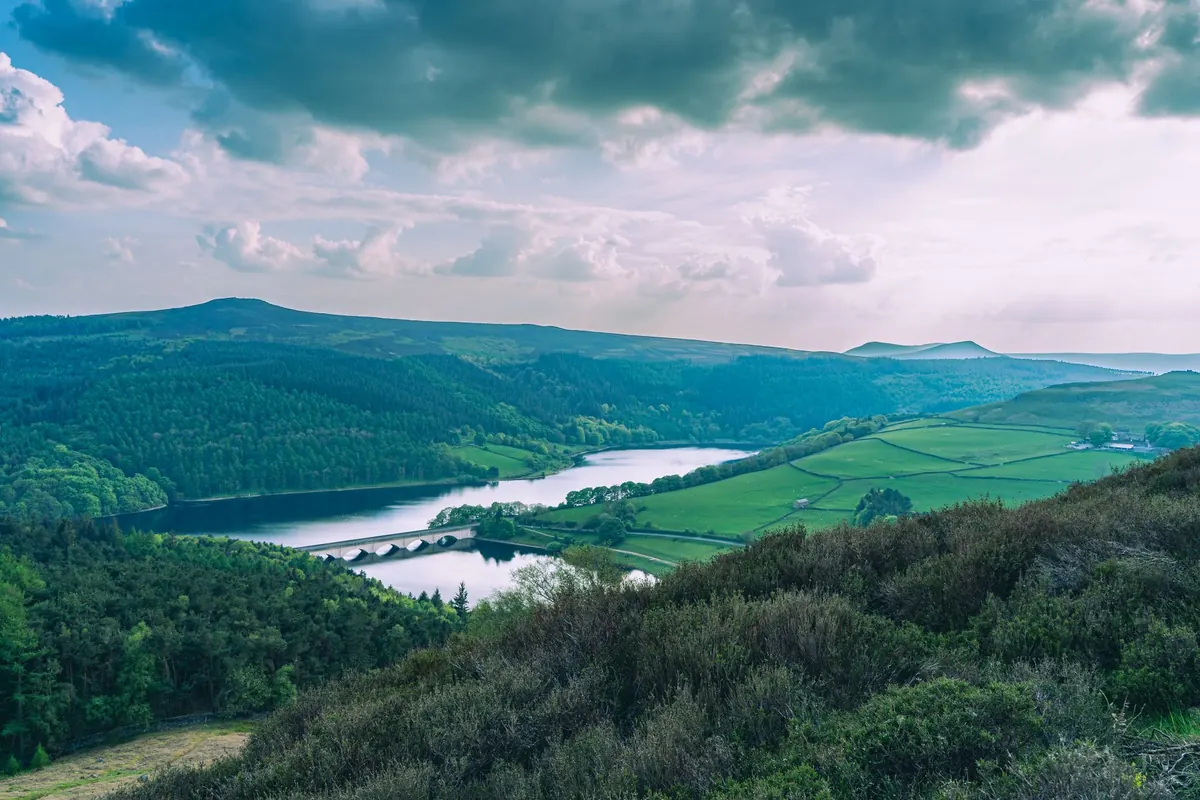
Fairy dwellings sit under green knolls — the fairy knowes of Scotland, the hollow hills of the Borders and Northumberland — or beneath lakes and old earthworks. A ring of mushrooms in a field marks a dancing place rather than a home, and country advice about not stepping inside one has less to do with superstition than with the wish not to be taken.
What the stories are really about
Fairy tales in Britain cluster around a handful of fears. A child grows sickly and is said to be a changeling. A midwife is called to a fine house in the night to help a fairy mother, and is paid in a way she cannot spend. A man spends one evening at a fairy feast and comes home to find his friends are old men. Time runs differently there, and that idea appears in almost every county collection.
The rules attached to fairies read like a survival list: don't eat their food, don't thank them, don't give them your name, carry iron or salt or bread, turn your coat inside out, and cross running water when you can. All of it amounts to the same instruction — keep one foot in the ordinary world.
Boggarts: The Tenant Who Never Leaves
Boggarts belong mainly to northern England and lowland Scotland, where the name appears as boggart, bogle or bogey. Boggart Hole Clough in Manchester keeps the word on the map. These are household spirits with no interest in helping. They bang doors, shift tools, curdle milk, tangle horses' manes and break crockery, and they seem to enjoy the fuss.
The best-known story is the flitting. A farmer gives up on his boggart and moves house, cart loaded, family aboard. A neighbour calls out to ask whether they are leaving. A voice answers from the churn on the cart: Ay, we're flitting. The family unloads and stays put. There is no point moving if the trouble comes with you.
Getting rid of one was said to be possible, though never easy. Set a boggart an impossible task — counting the holes in a sieve, twisting a rope of sand — and it may give up in disgust. Some tales have it laid under a threshold or bound to a particular place, which explains why one farm is troubled and the next is quiet.
Brownies: The Quiet Worker
Brownies are small, brown, shaggy and dressed in rags, and they do the work nobody wants to do. A brownie threshes the corn, churns the butter, mends the harness and settles the livestock before dawn. In return a household leaves out cream, bread and honey, and says nothing about it. Wages are an insult; thanks are worse.
The one rule everybody remembers is clothing. Give a brownie a new coat and he is gone, sometimes singing as he goes: Gie Brownie coat, gie Brownie sark, and ye'se get nae mair o' Brownie's wark. The Manx fenodyree and the hob of Yorkshire and Lincolnshire are close cousins, and they leave for much the same reasons: prying eyes, a lazy servant, an ungrateful master.
Brownies and boggarts sit on the same sliding scale. A brownie who is badly treated or laughed at can become a boggart, and a boggart can be described almost fondly when nothing else has gone wrong that week.
Telling Them Apart
When you meet a creature in a story and the text is vague, these questions sort it out quickly.
- Alone or in company? Fairies arrive as a crowd with music and horses. Boggarts and brownies work solo.
- Is work done or undone? Overnight chores finished means a brownie. Broken dishes and sour milk means a boggart.
- Where is it tied? To a hill and a hidden kingdom: fairy. To a family line: boggart. To one hearth and its dairy: brownie.
- What does the household do? Leave cream and keep quiet for a brownie. Move house, hopelessly, for a boggart. Stay away from the ring for a fairy.
- How does the story end? Departure, in most brownie tales. Exasperation, in most boggart tales. A warning, in most fairy ones.
Reading the Tales Without Flattening Them
Older county collections are the place to start, and they are easy to find in second-hand bookshops and local libraries. Note who told the story, where, and when, because a version recorded in 1890 by a clergyman reads differently from one recorded in 1950 by a schoolteacher. Compare two or three tellings of the same tale and watch what changes: the place name, the punishment, the reason for the creature's anger. Those changes are usually the most interesting part.
It also helps to ask what problem the story solved. A dead cow, a missing sickle, a child who would not come home before dark — folklore often works as local record-keeping with a supernatural filing system.
Starting Your Own Comparison
- Pick one creature and one county, then stick to both for a fortnight. Depth beats breadth here.
- Collect three versions of a single tale and write them side by side in a notebook.
- Mark the rules each version gives, and note when they contradict one another.
- Visit the places if you can. A clough, a knowe or a farm boundary makes the geography real.
- Keep the odd detail — the bowl left out, the coat given away — because that is where the human behaviour sits.
Treat the region as part of the evidence. A brownie belongs to a working farm, a boggart to a damp northern house, a fairy to the hill you are told not to disturb. Get the setting right and the creatures stop blending into one another, which is how it should be.
Photo: Pexels / Pixabay